
Introduction
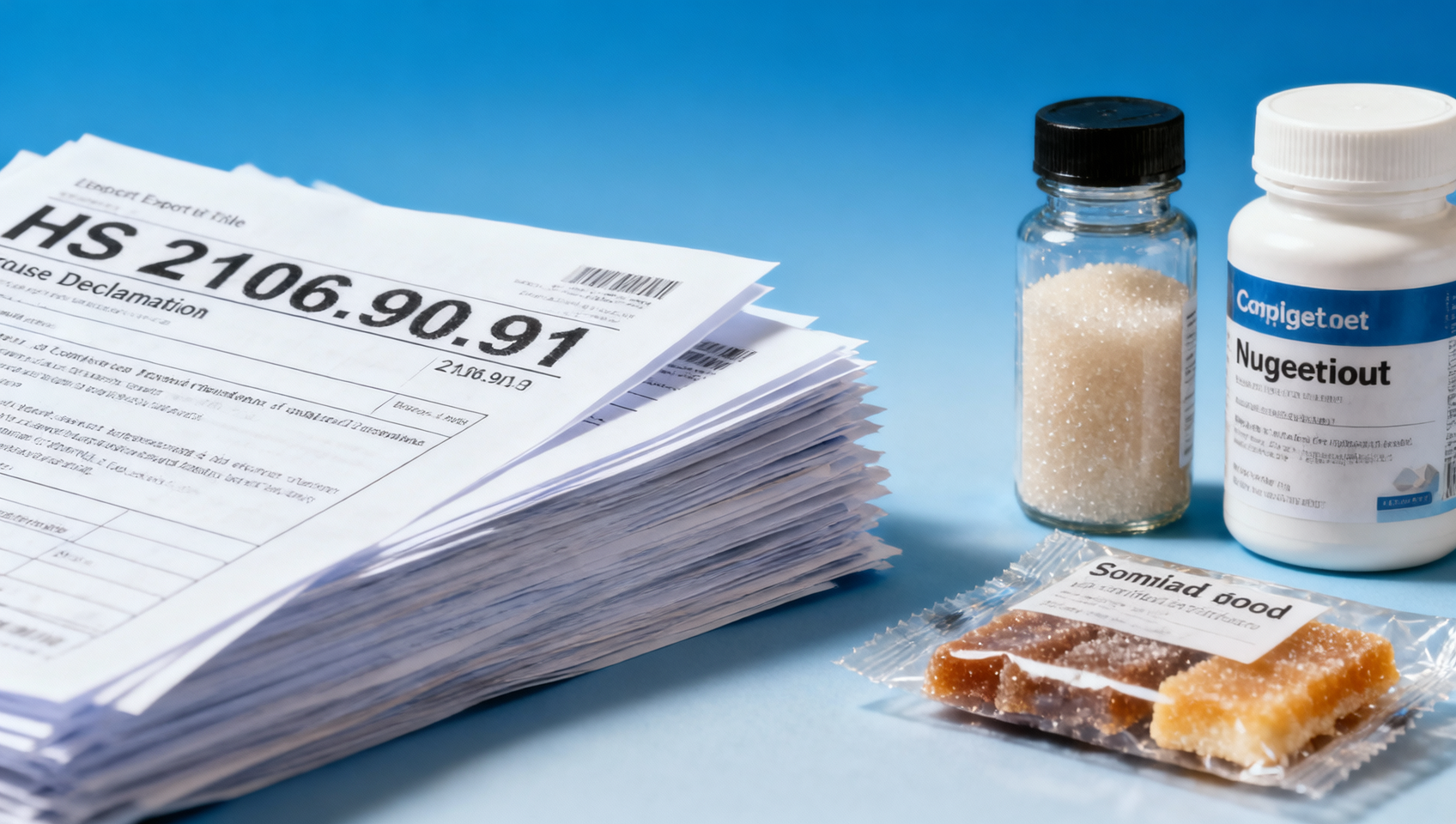
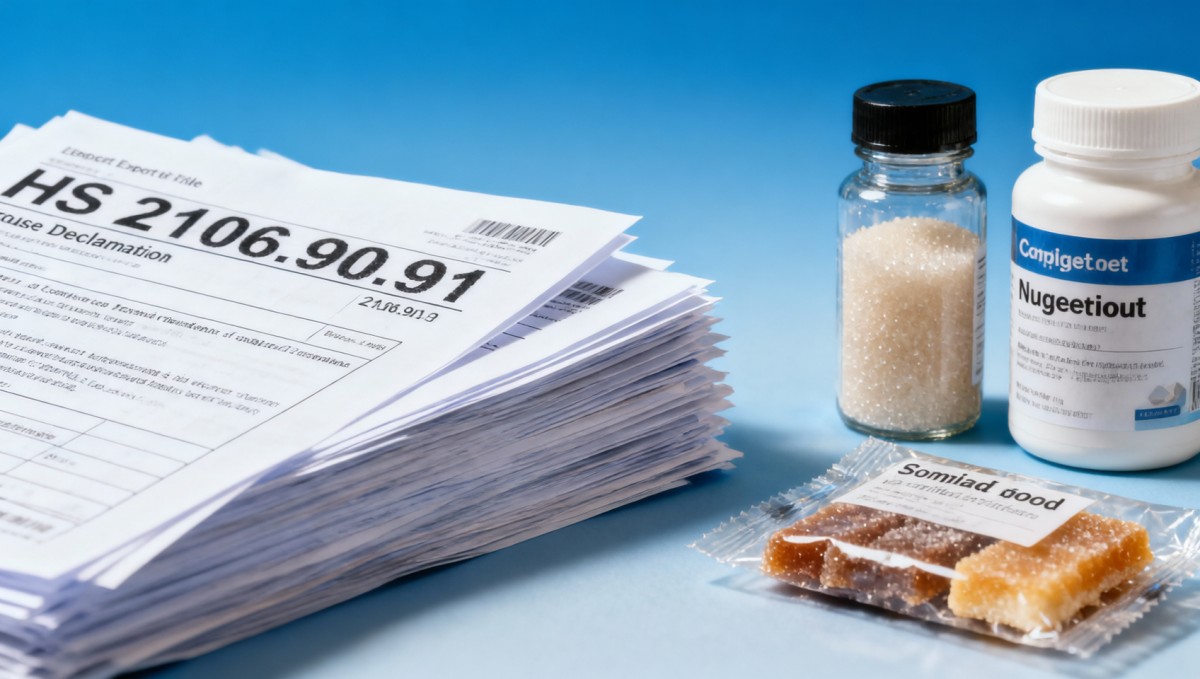
Starting April 10, 2026, China Customs will enforce a new HS subheading (2106.90.91) for all sugar-free and low-sugar food exports, including sweetener ingredients and finished products. The regulation requires exporters to declare sweetener compositions and provide a customs-stamped Compliance Statement to overseas buyers. This change directly impacts food manufacturers, ingredient suppliers, and trade intermediaries, particularly those targeting strict markets like the EU, US, and Japan.
Event Overview
Announced under China Customs Notice No. 31 (2026), the policy mandates:
- Mandatory use of HS code 2106.90.91 for sugar-free/low-sugar exports
- Full disclosure of sweetener ingredients in export declarations
- Issuance of a Compliance Statement verified by customs
Impact on Sub-Sectors
1. Export-Oriented Food Manufacturers
Companies producing sugar-free confectionery, beverages, or dairy must now reformulate export documentation. Delays may occur during initial implementation due to unfamiliarity with the new HS code.
2. Sweetener Ingredient Suppliers
Upstream suppliers of erythritol, stevia, or allulose face tighter traceability requirements. Buyers may request additional certifications to align with the Compliance Statement.
3. International Trade Intermediaries
Clearing agents and logistics providers need to update classification systems and verify documentation completeness to prevent shipment holds.
Key Action Points
1. Verify Product Classification
Confirm whether products meet China's definitions for "sugar-free" (≤0.5g/100g) or "low-sugar" (≤5g/100g) to apply the correct HS code.
2. Prepare Ingredient Documentation
Compile technical files for all sweeteners, including:
- Chemical composition reports
- Production process descriptions
- Third-party test reports (if available)
3. Establish Customs Coordination
Designate internal teams to liaise with customs brokers for timely Compliance Statement issuance, especially for time-sensitive shipments.
Industry Observation
Analysis suggests this reflects China's alignment with global food transparency trends rather than trade barriers. The immediate focus should be on procedural compliance, though long-term adjustments may emerge as:
- Importers potentially request reformulations to simplify declarations
- Customs clearance times increase temporarily during policy ramp-up
Conclusion
This regulatory update standardizes China's sugar-free export processes while addressing international scrutiny over food additives. Exporters should treat this as an operational compliance requirement rather than a market access restriction, prioritizing documentation accuracy and supply chain communication.
Source: China Customs Notice No. 31 (2026), published March 15, 2026. Ongoing monitoring recommended for potential supplementary guidelines.
Navigation
Send Us A Message