
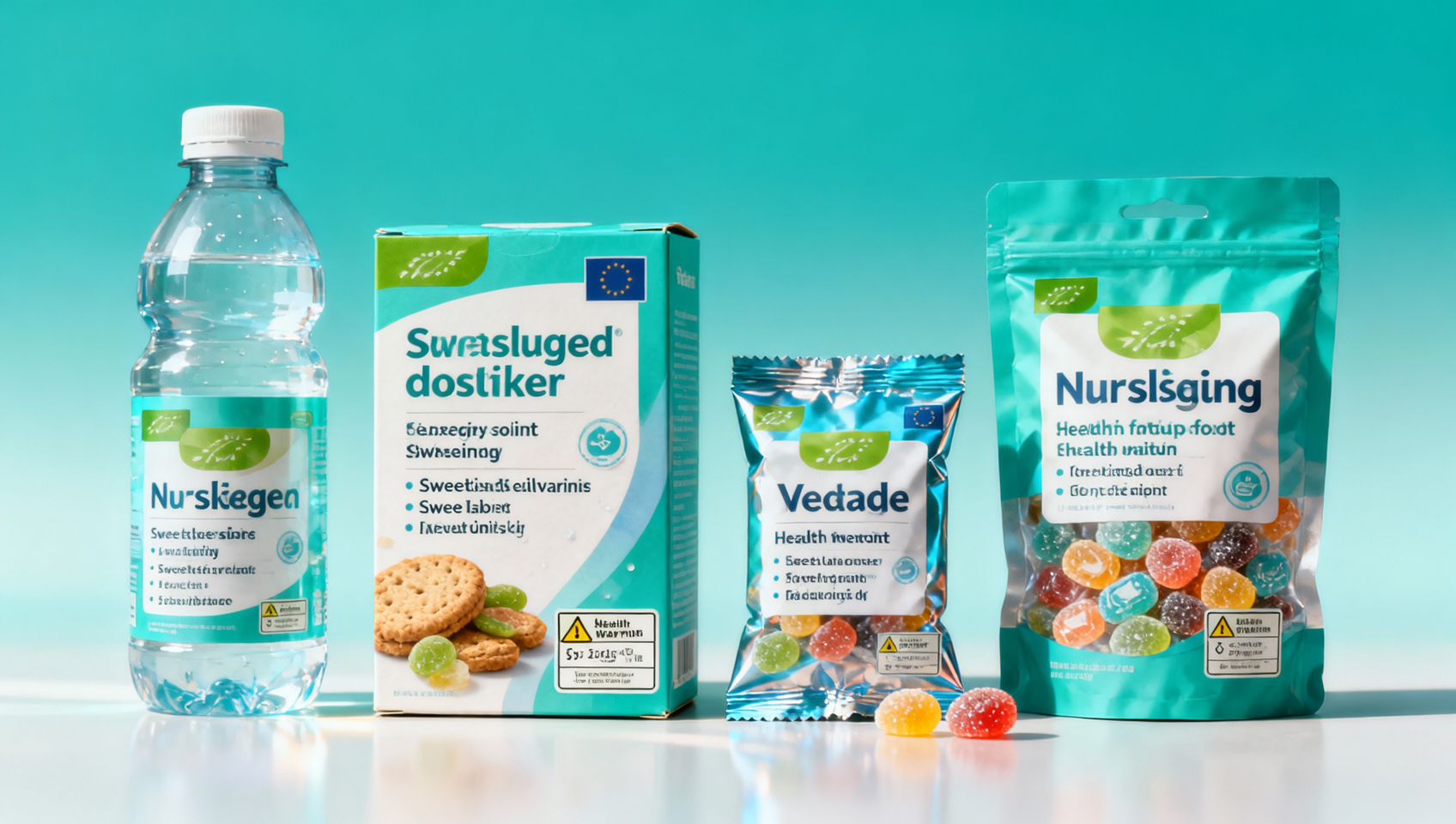
Starting April 1, 2026, the European Union will enforce stricter labeling requirements for sugar-free food products, including beverages, health foods, and confectionery. The new regulation mandates clear disclosure of sweetener types and standardized health warnings, impacting global exporters, particularly those from China. This move underscores the EU's focus on consumer transparency and food safety, requiring immediate compliance adjustments for affected industries.
Event Overview
The EU Commission's (EU) 2026/789 Regulation takes effect on April 1, 2026, requiring all sugar-free food imports to the EU to explicitly list sweetener names (e.g., erythritol, sucralose, allulose) and display warnings like 'Excessive intake may cause gastrointestinal discomfort'. Non-compliant products will face border rejection or market removal.
Impact on Sub-Sectors
Export Manufacturers
Direct exporters of sugar-free products to the EU must reformulate labels and update packaging designs, incurring additional costs and potential delays in market entry.
Ingredient Suppliers
Sweetener producers may see shifts in demand as manufacturers reassess formulations to align with labeling clarity and consumer perception.
Logistics & Compliance Services
Supply chain intermediaries must verify updated documentation to prevent customs clearance issues, emphasizing pre-shipment label audits.
Key Action Points for Businesses
1. Label Compliance Review
Prioritize updating packaging templates to include exact sweetener names and EU-approved warning phrases.
2. Supply Chain Coordination
Align with raw material suppliers to ensure traceability of sweetener types for accurate labeling.
3. Regulatory Monitoring
Track national-level implementations across EU member states, which may introduce additional requirements.
Industry Perspective
Analysis suggests this regulation reflects broader EU trends toward ingredient transparency. While initially disruptive, it may incentivize cleaner formulations. Companies should treat this as a compliance baseline rather than a one-time adjustment, given potential future expansions to other additives.
Conclusion
The regulation sets a precedent for sugar-free product labeling globally. Exporters should view this as an opportunity to standardize disclosures across markets while mitigating short-term operational friction through proactive compliance.
Source: EU Commission (EU) 2026/789 Regulation (Official Journal of the EU, 2026). Ongoing monitoring recommended for member-state interpretations.
Navigation
Send Us A Message